

From Disclosure to Customer Outcomes
Disclosure still matters, but Consumer Duty asks a harder question: have customers understood what the information means for them? This article explores why firms need to move beyond “we told them” and evidence whether customers can connect the facts, form the right mental model and make effective decisions.

The FCA says avoid jargon. But how do you evidence it?
Familiarity is one of the most important, and least defined, ideas in customer communications. This article explores why a word can be technically correct yet still feel unfamiliar to a retail reader, and why measuring familiarity properly requires more than internal instinct, readability scores or guesswork.

Why Customer Understanding Starts With Knowing Your Target Market
Customer Understanding starts with understanding who your customers are. This article explores why prospective investors may differ materially from the wider population, and what that means for Consumer Duty, communication design and customer understanding.
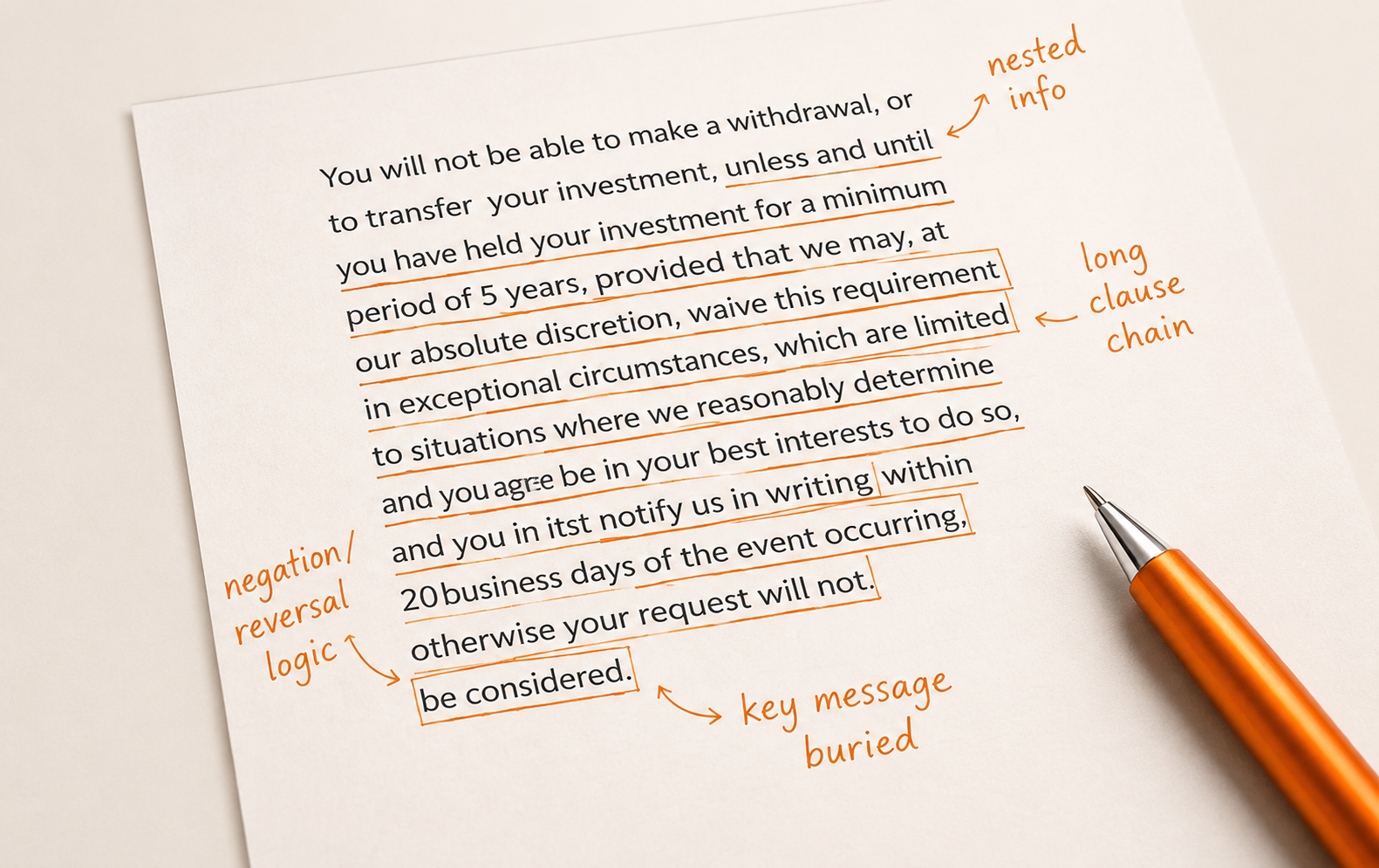
When does plain English become a real customer understanding issue?
Consumer Duty talks a lot about plain English, but the practical question is what firms should actually be looking for. This article draws on new CUE calibration research showing that customer understanding risks rise sharply when familiar drafting problems combine, especially within individual paragraphs.
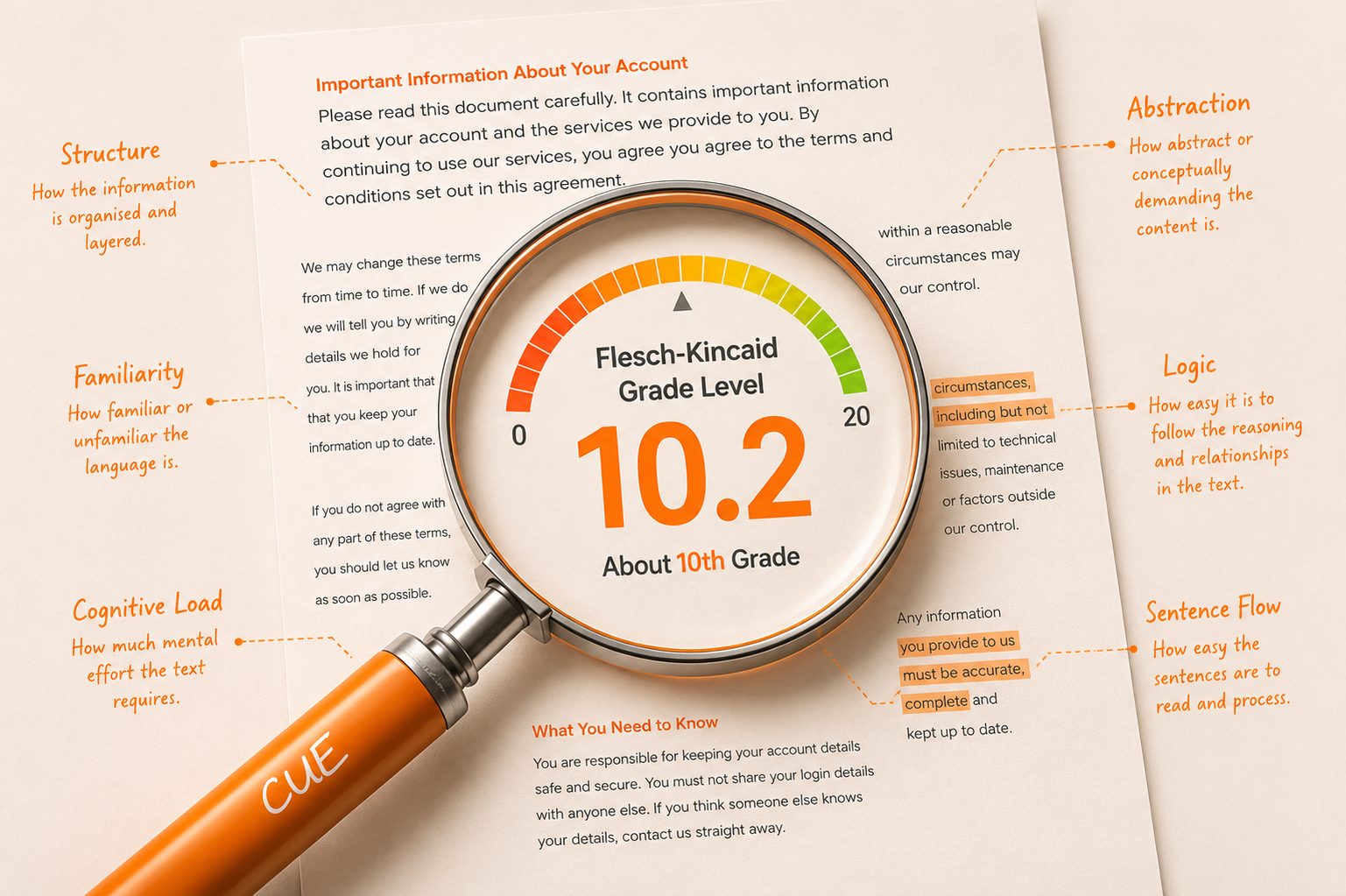
What do readability scores actually measure?
Most communication professionals know about readability scores, but not everyone understands what they actually measure. This article explains how Flesch Kincaid, Fog, SMOG, ARI and similar scores differ, what they miss, and why meaningful Customer Understanding work has to go beyond a single number.
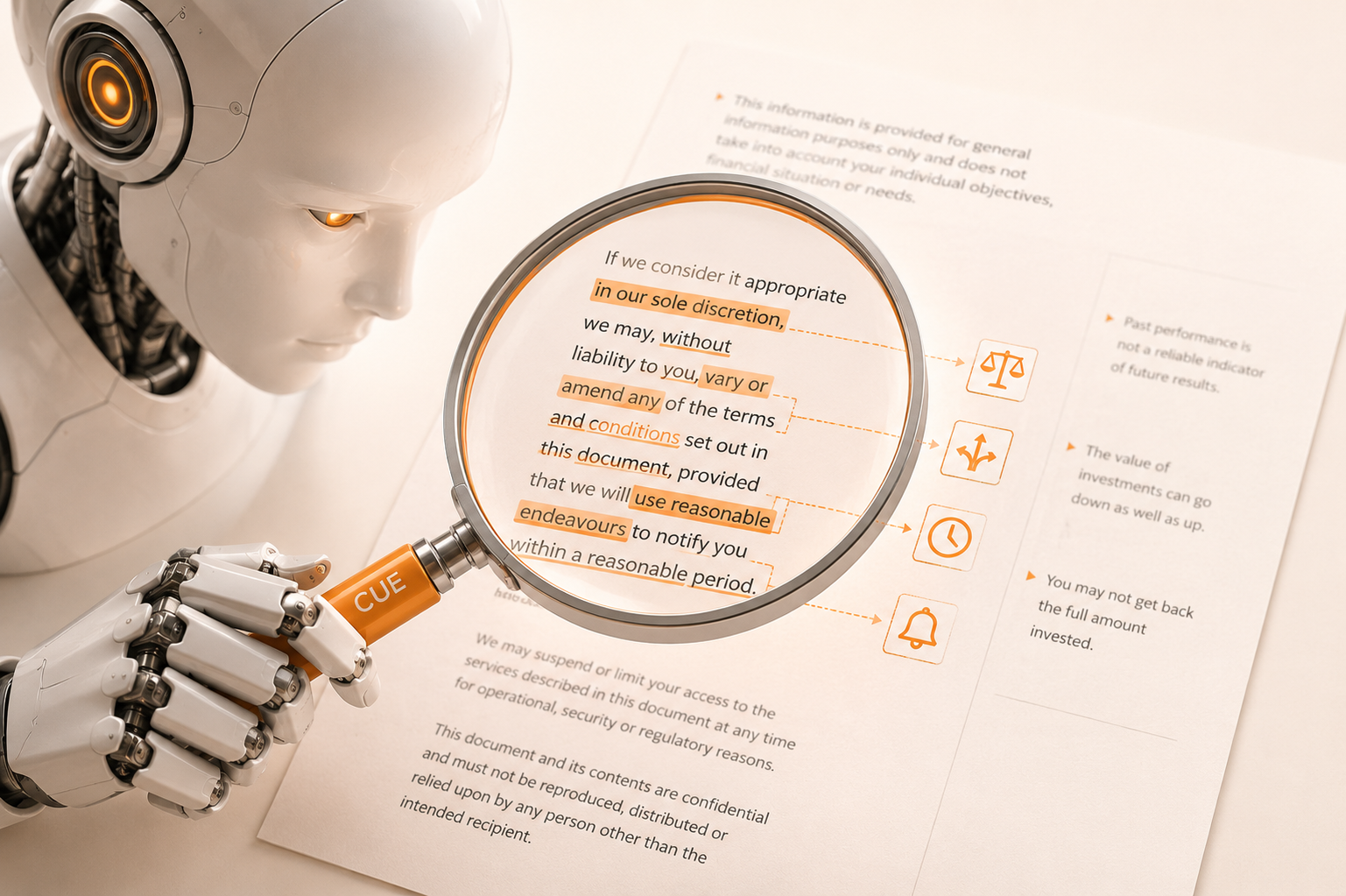
Can AI really judge whether text is easy to understand?
Most people’s first instinct is the same: upload the document, ask AI to simplify it, and assume the problem is solved. This article explains why that approach breaks down in regulated communications, and why reliable customer understanding evidence needs far more than a clever prompt.